Posts mit dem Label Australia werden angezeigt. Alle Posts anzeigen

Freitag, 2. März 2012

Australia - Shark Bay, Western Australia

At the most westerly point of the Australian continent, Shark Bay, with its islands and the land surrounding it, has three exceptional natural features: its vast sea-grass beds, which are the largest (4,800 km2) and richest in the world; its dugong (‘sea cow’) population; and its stromatolites (colonies of algae which form hard, dome-shaped deposits and are among the oldest forms of life on earth). Shark Bay is also home to five species of endangered mammals.

Shark Bay, Western Australia - Heather

Sonntag, 15. Januar 2012

Australia - Tasmanian Wilderness

In a region that has been subjected to severe glaciation, these parks and reserves, with their steep gorges, covering an area of over 1 million ha, constitute one of the last expanses of temperate rainforest in the world. Remains found in limestone caves attest to the human occupation of the area for more than 20,000 years.


Tasmanian Wilderness


Tasmanian Wilderness Bay of Fires Walk


Tasmanian Wilderness Painted Cliffs 1


Tasmanian Wilderness Painted Cliffs


Tasmanian Wilderness Grasbäume


Australia - Wet Tropics of Queensland

This area, which stretches along the north-east coast of Australia for some 450 km, is made up largely of tropical rainforests. This biotope offers a particularly extensive and varied array of plants, as well as marsupials and singing birds, along with other rare and endangered animals and plant species.

Wet Tropics of Queensland

Wet Tropics of Queensland, Regenwald

Australia - Purnululu National Park

The 239,723 ha Purnululu National Park is located in the State of Western Australia. It contains the deeply dissected Bungle Bungle Range composed of Devonian-age quartz sandstone eroded over a period of 20 million years into a series of beehive-shaped towers or cones, whose steeply sloping surfaces are distinctly marked by regular horizontal bands of dark-grey cyanobacterial crust (single-celled photosynthetic organisms). These outstanding examples of cone karst owe their existence and uniqueness to several interacting geological, biological, erosional and climatic phenomena.

Purnululu National Park

Purnululu National Park

Freitag, 18. November 2011

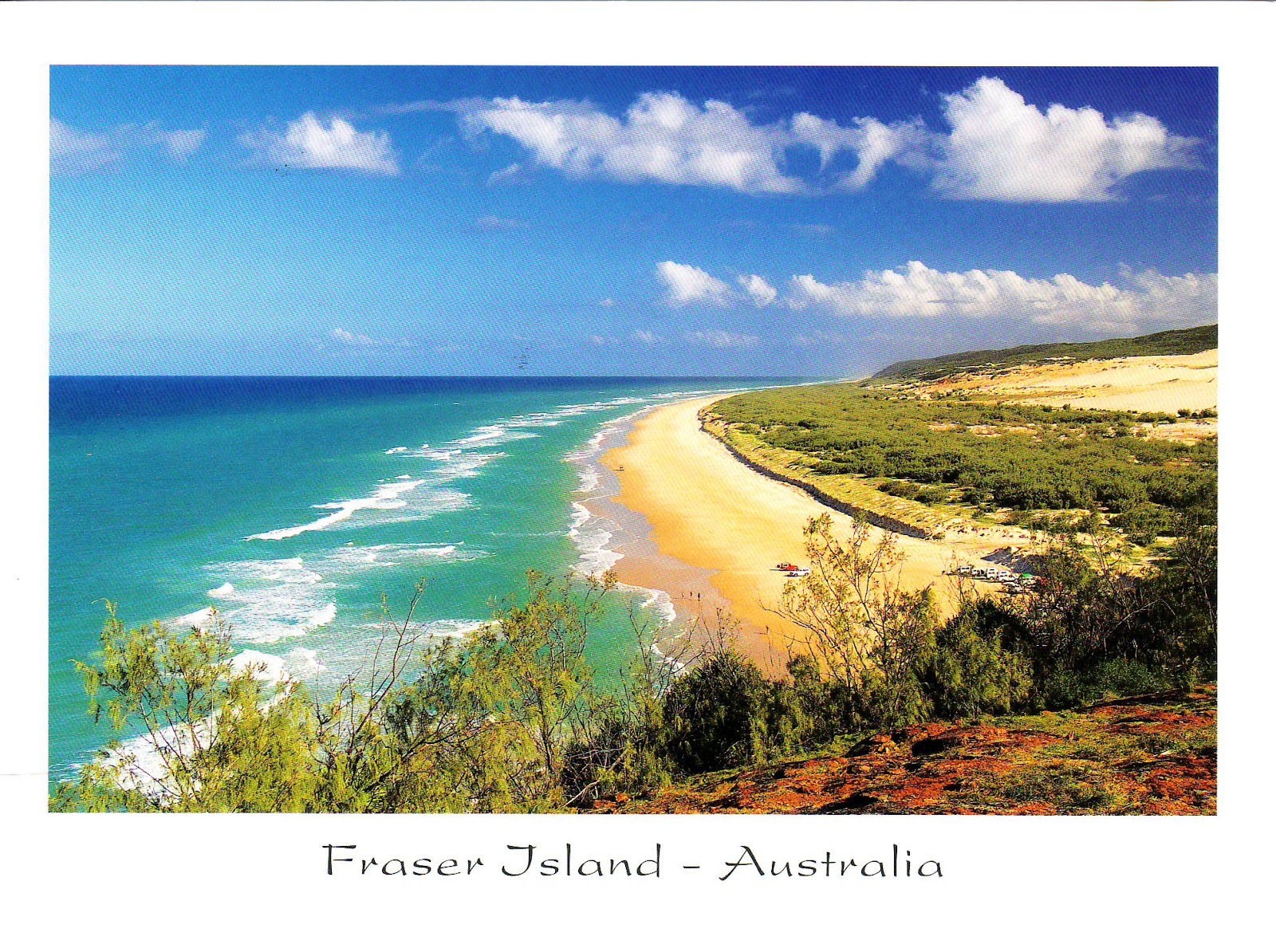
Australia - Fraser Island

Fraser Island lies just off the east coast of Australia. At 122 km long, it is the largest sand island in the world. Majestic remnants of tall rainforest growing on sand and half the world’s perched freshwater dune lakes are found inland from the beach. The combination of shifting sand-dunes, tropical rainforests and lakes makes it an exceptional site. 


Fraser Island, Australia
Fraser Island

Samstag, 5. November 2011

Australia - Great Barrier Reef

The Great Barrier Reef is a site of remarkable variety and beauty on the north-east coast of Australia. It contains the world’s largest collection of coral reefs, with 400 types of coral, 1,500 species of fish and 4,000 types of mollusc. It also holds great scientific interest as the habitat of species such as the dugong (‘sea cow’) and the large green turtle, which are threatened with extinction.


Great Barrier Reef, Australia - Rosie

Australia - Greater Blue Mountains Area

The Greater Blue Mountains Area consists of 1.03 million ha of sandstone plateaux, escarpments and gorges dominated by temperate eucalypt forest. The site, comprised of eight protected areas, is noted for its representation of the evolutionary adaptation and diversification of the eucalypts in post-Gondwana isolation on the Australian continent. Ninety-one eucalypt taxa occur within the Greater Blue Mountains Area which is also outstanding for its exceptional expression of the structural and ecological diversity of the eucalypts associated with its wide range of habitats. The site provides significant representation of Australia's biodiversity with ten percent of the vascular flora as well as significant numbers of rare or threatened species, including endemic and evolutionary relict species, such as the Wollemi pine, which have persisted in highly-restricted microsites. 


Blue Mountains, Australia - Rosie

Australia - Sydney Opera House

Inaugurated in 1973, the Sydney Opera House is a great architectural work of the 20th century that brings together multiple strands of creativity and innovation in both architectural form and structural design. A great urban sculpture set in a remarkable waterscape, at the tip of a peninsula projecting into Sydney Harbour, the building has had an enduring influence on architecture. The Sydney Opera House comprises three groups of interlocking vaulted ‘shells’ which roof two main performance halls and a restaurant. These shell-structures are set upon a vast platform and are surrounded by terrace areas that function as pedestrian concourses. In 1957, when the project of the Sydney Opera House was awarded by an international jury to Danish architect Jørn Utzon, it marked a radically new approach to construction.


Sydney Opera House, Australia (UNESCO) - Kim

Montag, 31. Oktober 2011

Australia - Uluru-Kata Tjuta National Park

This park, formerly called Uluru (Ayers Rock – Mount Olga) National Park, features spectacular geological formations that dominate the vast red sandy plain of central Australia. Uluru, an immense monolith, and Kata Tjuta, the rock domes located west of Uluru, form part of the traditional belief system of one of the oldest human societies in the world. The traditional owners of Uluru-Kata Tjuta are the Anangu Aboriginal people.

Ayers Rock, Australia

Ayersrock AU-109371

Ayersrock, Australia - Rosie