Posts mit dem Label Germany werden angezeigt. Alle Posts anzeigen

Samstag, 8. Dezember 2012

Germany - Maulbronn Monastery Complex

Founded in 1147, the Cistercian Maulbronn Monastery is considered the most complete and best-preserved medieval monastic complex north of the Alps. Surrounded by fortified walls, the main buildings were constructed between the 12th and 16th centuries. The monastery's church, mainly in Transitional Gothic style, had a major influence in the spread of Gothic architecture over much of northern and central Europe. The water-management system at Maulbronn, with its elaborate network of drains, irrigation canals and reservoirs, is of exceptional interest.

Maulbronn Monastery

Germany - Frontiers of the Roman Empire

The ‘Roman Limes’ represents the border line of the Roman Empire at its greatest extent in the 2nd century AD. It stretched over 5,000 km from the Atlantic coast of northern Britain, through Europe to the Black Sea, and from there to the Red Sea and across North Africa to the Atlantic coast. The remains of the Limes today consist of vestiges of built walls, ditches, forts, fortresses, watchtowers and civilian settlements. Certain elements of the line have been excavated, some reconstructed and a few destroyed. The two sections of the Limes in Germany cover a length of 550 km from the north-west of the country to the Danube in the south-east. The 118-km-long Hadrian’s Wall (UK) was built on the orders of the Emperor Hadrian c. AD 122 at the northernmost limits of the Roman province of Britannia. It is a striking example of the organization of a military zone and illustrates the defensive techniques and geopolitical strategies of ancient Rome. The Antonine Wall, a 60-km long fortification in Scotland was started by Emperor Antonius Pius in 142 AD as a defense against the “barbarians” of the north. It constitutes the northwestern-most portion of the Roman Limes.

Frontiers of the Roman Empire

Samstag, 6. Oktober 2012

Germany - Margravial Opera House Bayreuth

A masterpiece of Baroque theatre architecture, built between 1745 and 1750, the Opera House is the only entirely preserved example of its type where an audience of 500 can experience Baroque court opera culture and acoustics authentically, as its auditorium retains its original materials, i.e. wood and canvas. Commissioned by Margravine Wilhelmine, wife of Frederick, Margrave of Brandenburg–Beyreuth, it was designed by the renowned theatre architect Giuseppe Galli Bibiena. As a court opera house in a public space, it foreshadowed the large public theatres of the 19th century. The highly decorated theatre’s tiered loge structure of wood with illusionistic painted canvas represents the ephemeral ceremonial architectural tradition that was employed in pageants and celebrations for princely self-representation.

Bayreuth Außenansicht - Margravial Opera House Bayreuth

Bayreuth Bühne - Margravial Opera House Bayreuth

Bayreuth Fürstenloge - Margravial Opera House Bayreuth

Bayreuth Loge - Margravial Opera House Bayreuth

Bayreuth Loge - Margravial Opera House Bayreuth

Bayreuth Map - Margravial Opera House Bayreuth

Bayreuth Multi - Margravial Opera House Bayreuth

Sonntag, 15. April 2012

Germany - Völklingen Ironworks

The ironworks, which cover some 6 ha, dominate the city of Völklingen. Although they have recently gone out of production, they are the only intact example, in the whole of western Europe and North America, of an integrated ironworks that was built and equipped in the 19th and 20th centuries and has remained intact.

Völklingen Ironworks - Mel

Freitag, 2. März 2012

Germany - Berlin Modernism Housing Estates

Berlin Modernism Housing Estates. The property consists of six housing estates that testify to innovative housing policies from 1910 to 1933, especially during the Weimar Republic, when the city of Berlin was particularly progressive socially, politically and culturally. The property is an outstanding example of the building reform movement that contributed to improving housing and living conditions for people with low incomes through novel approaches to town planning, architecture and garden design. The estates also provide exceptional examples of new urban and architectural typologies, featuring fresh design solutions, as well as technical and aesthetic innovations. Bruno Taut, Martin Wagner and Walter Gropius were among the leading architects of these projects which exercised considerable influence on the development of housing around the world.

Berlin Modernism Housing Estates - Anja

Berlin Modernism Housing Estates - Anja

Sonntag, 15. Januar 2012

Germany - Castles of Augustusburg and Falkenlust at Brühl

Set in an idyllic garden landscape, Augustusburg Castle (the sumptuous residence of the prince-archbishops of Cologne) and the Falkenlust hunting lodge (a small rural folly) are among the earliest examples of Rococo architecture in 18th-century Germany.

Schloss Augustusburg
Castles of Augustusburg and Falkenlust at Brühl

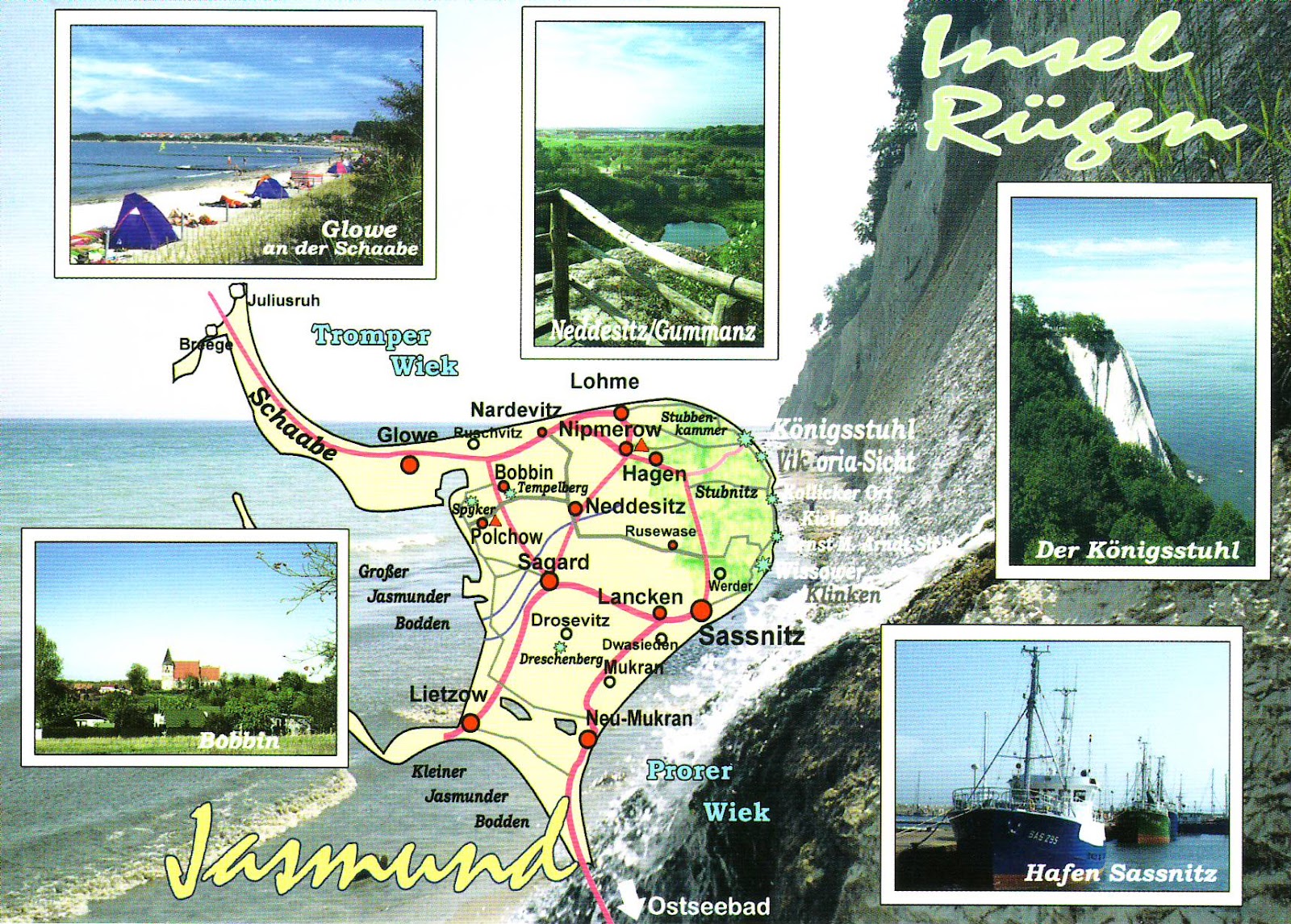
Germany - Primeval Beech Forests of the Carpathians and the Ancient Beech Forests of Germany * Jasmund

The Ancient Beech Forests of Germany, represent examples of on-going post-glacial biological and ecological evolution of terrestrial ecosystems and are indispensable to understanding the spread of the beech (Fagus sylvatica) in the Northern Hemisphere across a variety of environments. The new inscription represents the addition of five forests totaling 4,391 hectares that are added to the 29,278 hectares of Slovakian and Ukranian beech forests inscribed on the World Heritage List in 2007. The tri-national property is now to be known as the Primeval Beech Forests of the Carpathians and the Ancient Beech Forests of Germany (Slovakia, Ukraine, Germany).
Jasmund:
Jasmund Nationalpark, Wissower Klinken


Jasmund Nationalpark, Rügen


Jasmund Nationalpark, Rügen
Jasmund Nationalpark, Stubbenkammer, Rüge

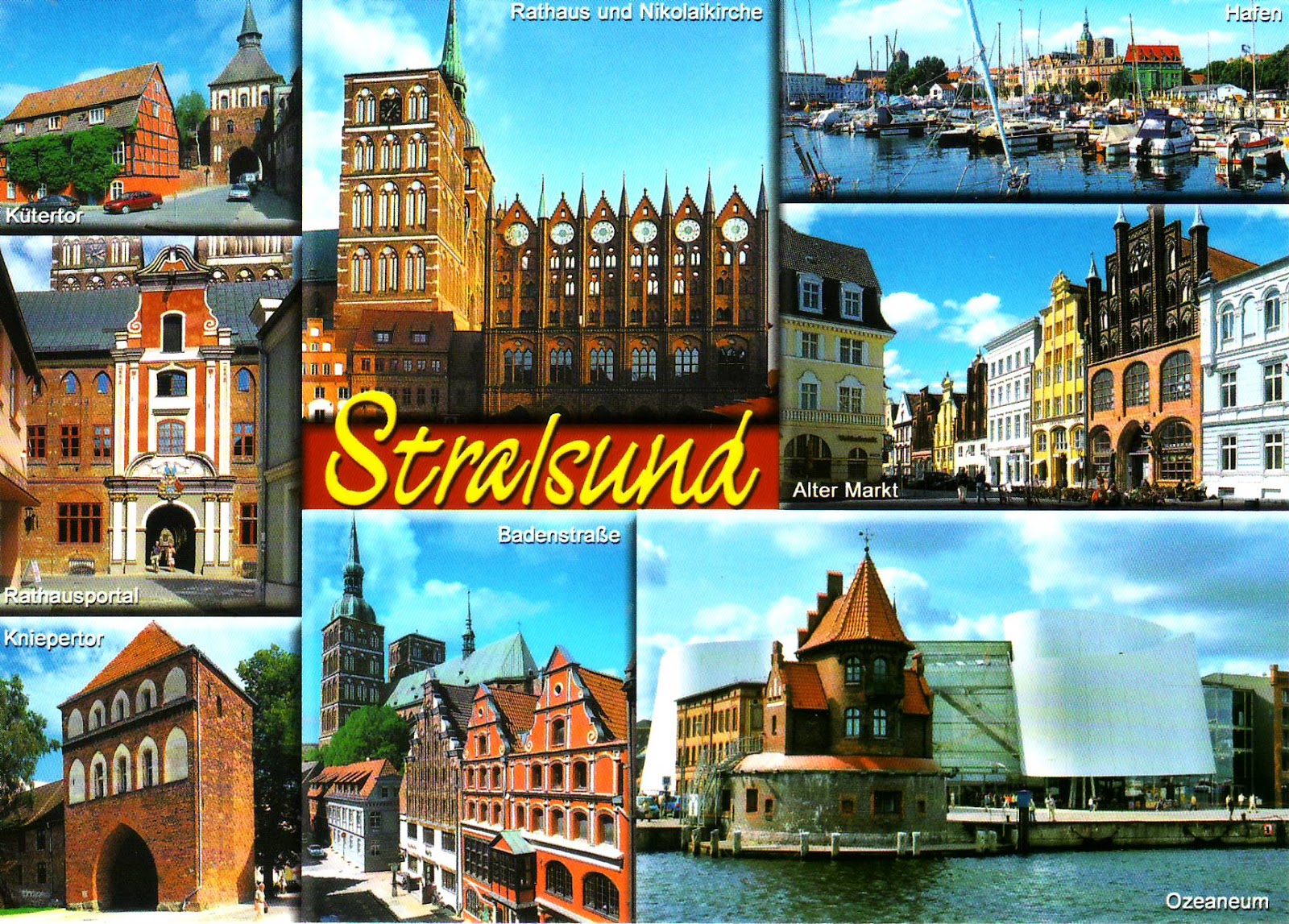
Germany -Historic Centres of Stralsund

The medieval towns of Wismar and Stralsund, on the Baltic coast of northern Germany, were major trading centres of the Hanseatic League in the 14th and 15th centuries. In the 17th and 18th centuries they became Swedish administrative and defensive centres for the German territories. They contributed to the development of the characteristic building types and techniques of Brick Gothic in the Baltic region, as exemplified in several important brick cathedrals, the Town Hall of Stralsund, and the series of houses for residential, commercial and crafts use, representing its evolution over several centuries.

Hansestadt Stralsund, Rathaus, Nikolaikirche
Hansestadt Stralsund

Germany - Town of Bamberg

From the 10th century onwards, this town became an important link with the Slav peoples, especially those of Poland and Pomerania. During its period of greatest prosperity, from the 12th century onwards, the architecture of Bamberg strongly influenced northern Germany and Hungary. In the late 18th century it was the centre of the Enlightenment in southern Germany, with eminent philosophers and writers such as Hegel and Hoffmann living there.

Town of Bamberg


Bamberg, Altes Rathaus
 Bamberg - Ingrid

Town of Bamberg

Germany - Luther Memorials in Wittenberg

These places in Saxony-Anhalt are all associated with the lives of Martin Luther and his fellow-reformer Melanchthon. They include Melanchthon's house in Wittenberg, the houses in Eisleben where Luther was born in 1483 and died in 1546, his room in Wittenberg, the local church and the castle church where, on 31 October 1517, Luther posted his famous '95 Theses', which launched the Reformation and a new era in the religious and political history of the Western world.

Lutherstadt Eisleben

Lutherstadt Wittenberg

Germany - Collegiate Church, Castle, and Old Town of Quedlinburg


Quedlinburg, in the Land of Sachsen-Anhalt, was a capital of the East Franconian German Empire at the time of the Saxonian-Ottonian ruling dynasty. It has been a prosperous trading town since the Middle Ages. The number and high quality of the timber-framed buildings make Quedlinburg an exceptional example of a medieval European town. The Collegiate Church of St Servatius is one of the masterpieces of Romanesque architecture.


Quedlinburg
Quedlinburg
Quedlinburg

Germany - Old town of Regensburg with Stadtamhof

Located on the Danube River in Bavaria, this medieval town contains many buildings of exceptional quality that testify to its history as a trading centre and to its influence on the region from the 9th century. A notable number of historic structures span some two millennia and include ancient Roman, Romanesque and Gothic buildings. Regensburg’s 11th- to 13th-century architecture – including the market, city hall and cathedral – still defines the character of the town marked by tall buildings, dark and narrow lanes, and strong fortifications. The buildings include medieval patrician houses and towers, a large number of churches and monastic ensembles as well as the 12th-century Old Bridge, which dates from. The town is also remarkable for the vestiges testifing to its rich history as one of the centres of the Holy Roman Empire that turned to Protestantism.


Regensburg, Steinerne Brücke - Ingrid PP
Regensburg, Steinerne Brücke

Regensburg

Regensburg

Regensburg

Regensburg Dom - Old town of Regensburg with Stadtamhof

Regensburg Dom und Steinerne Brücke - Old town of Regensburg with Stadtamhof

Old town of Regensburg with Stadtamhof

Regensburg am Abend - Old town of Regensburg with Stadtamhof 

Regensburg Dom und Steinerne Brücke - Old town of Regensburg with Stadtamhof 


Freitag, 13. Januar 2012

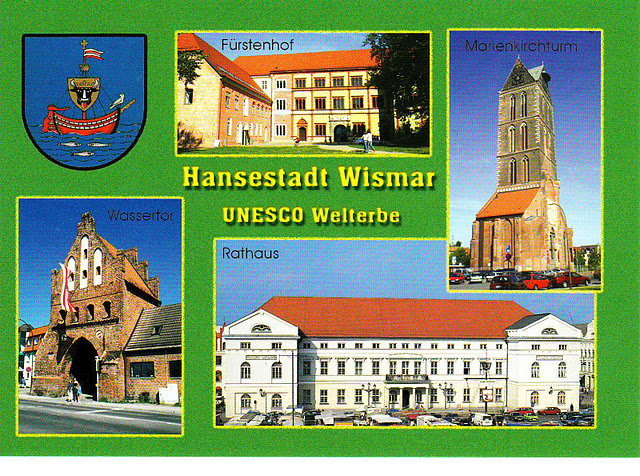
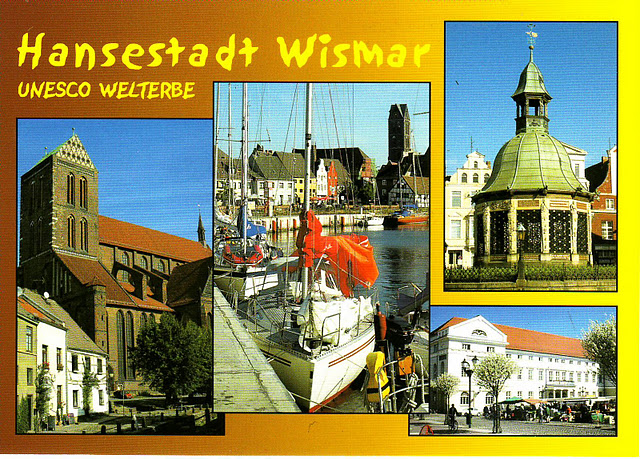
Germany - Historic Centres of Wismar

The medieval towns of Wismar and Stralsund, on the Baltic coast of northern Germany, were major trading centres of the Hanseatic League in the 14th and 15th centuries. In the 17th and 18th centuries they became Swedish administrative and defensive centres for the German territories. They contributed to the development of the characteristic building types and techniques of Brick Gothic in the Baltic region, as exemplified in several important brick cathedrals, the Town Hall of Stralsund, and the series of houses for residential, commercial and crafts use, representing its evolution over several centuries.

Wismarer Giebelhäuser

Nikolaikirche, Frische Grube, Wasserkunst und Rathaus  - Wismar

St. Nikolai, Wismar

Georgenkirche Wismar

Georgenkirche, Wismar

Georgenkirche, Wismar

Heilig-Geist-Kirche, Wismar

Nikolaikirche, Wismar

St Marien Kirche, Wismar

Wismar

Wismar

Wismar

Heilige Geist Kriche - Wismar

Wismar

Wismar


Wismar

Wismar

Wismar

Wismar, Backsteingothik